Indications
INDICATION

IMDELLTRA® (tarlatamab-dlle) is indicated for the treatment of adult patients with extensive stage small cell lung cancer (ES-SCLC) with disease progression on or after platinum-based chemotherapy.

INDICATION

IMDELLTRA® (tarlatamab-dlle) is indicated for the treatment of adult patients with extensive stage small cell lung cancer (ES-SCLC) with disease progression on or after platinum-based chemotherapy.

General safety

3% of patients discontinued treatment due to TRAEs with IMDELLTRA® vs 6% with chemotherapy1,*

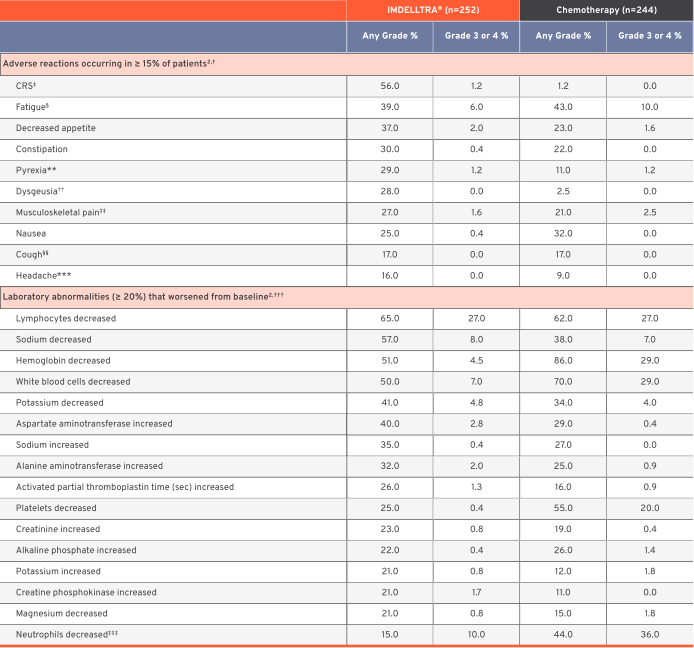
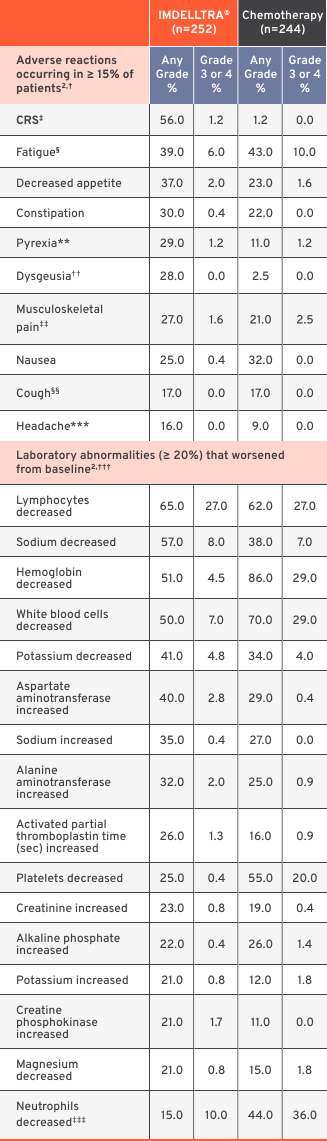
Most common adverse reactions and lab abnormalities among patients included in DeLLphi-3042

Table of Most common adverse reactions and lab abnormalities among patients included in DeLLphi-304 Table of Most common adverse reactions and lab abnormalities among patients included in DeLLphi-304

Incidence of Grade ≥ 3 TRAEs1,*

IMDELLTRA®

27%

(n=67/252)

VS

Chemotherapy

62%

(n=152/244)

TRAEs resulting in dose interruptions and/or reductions1,*

IMDELLTRA®

19%

(n=48/252)

VS

Chemotherapy

55%

(n=134/244)

  • In the pooled DeLLphi-300, DeLLphi-301, and DeLLphi-304 safety population, the most common adverse reactions (≥ 20%) in patients treated with IMDELLTRA® were CRS (57%), fatigue (48%), decreased appetite (38%), dysgeusia (34%), pyrexia (33%), constipation (31%), musculoskeletal pain (31%), and nausea (25%)2,§§§

In the DeLLphi-304 safety population:

  • Permanent discontinuation of IMDELLTRA® due to adverse reactions occurred in 6% of patients. Adverse reactions resulting in permanent discontinuation in > 1% of patients included pneumonia (1.2%)2,****
  • Dosage interruptions of IMDELLTRA® due to adverse reactions occurred in 38% of patients. Adverse reactions requiring dosage interruptions in ≥ 2% of patients included neutropenia (5%), fatigue (4.4%), pneumonia (4%), decreased appetite (2.8%), and COVID-19 (2%)2,****

In the DeLLphi-304 post-hoc descriptive analysis of patients with brain metastases:

  • Grade ≥ 3 TRAEs occurred in 25.5% (n=25/98) of patients treated with IMDELLTRA® versus 65.6% (n=61/93) with chemotherapy, which were comparable to results from the overall DeLLphi-304 study (27% with IMDELLTRA® vs 62% with chemotherapy)1,3,*,††††
  • Among patients with vs without brain metastases, CRS incidence was 54.1% (n=53/98) vs 57.8% (n=89/154), and ICANS incidence was 9.0% (n=9/98) vs 4.0% (n=6/154), respectively3,††††

*Based on the DeLLphi-304 safety population of 496 patients who had received at least 1 dose of the trial treatment.1,3

IMDELLTRA® adverse reactions were graded using CTCAE Version 4.0 and Version 5.0.2

Based on American Society for Transplantation and Cellular Therapy (ASTCT) 2019.2

§Includes fatigue and asthenia.2

**Includes body temperature increased, hyperthermia, pyrexia.2

††Includes ageusia, dysgeusia, hypogeusia.2

‡‡Includes arthralgia, back pain, bone pain, musculoskeletal pain, myalgia, neck pain, non-cardiac chest pain, pain in extremity, spinal pain.2

§§Includes cough and productive cough.2

***Includes headache and tension headache.2

†††All Grade lab abnormalities occurring at a frequency less than 20% included decreased neutrophils.2

‡‡‡The denominator used to calculate the rate varied for IMDELLTRA® (Range: 229 to 250) and chemotherapy (Range: 205 to 226) based on the number of patients with a baseline value and at least one post-treatment value.2

§§§Based on the pooled safety population of 473 patients with ES-SCLC enrolled in DeLLphi-300, DeLLphi-301, and DeLLphi-304 who received IMDELLTRA® 1 mg on Cycle 1 Day 1 followed by 10 mg on Days 8 and 15, and then Q2W until disease progression or intolerable toxicity.2

****Based on 252 patients enrolled in DeLLphi-304 who received IMDELLTRA® 1 mg on Cycle 1 Day 1 followed by 10 mg on Days 8, 15, and then Q2W.2

††††Based on the DeLLphi-304 post-hoc descriptive analysis of patients with stable, asymptomatic brain metastases treated with IMDELLTRA® (n=98) or chemotherapy (n=99).3

CRS, cytokine release syndrome; CTCAE, Common Terminology Criteria for Adverse Events; ICANS, immune effector cell–associated neurotoxicity syndrome; Q2W, every 2 weeks; TRAE, treatment-related adverse event.

CRS

39% of IMDELLTRA®-treated patients experienced Grade 1 CRS in the pooled safety population2,*

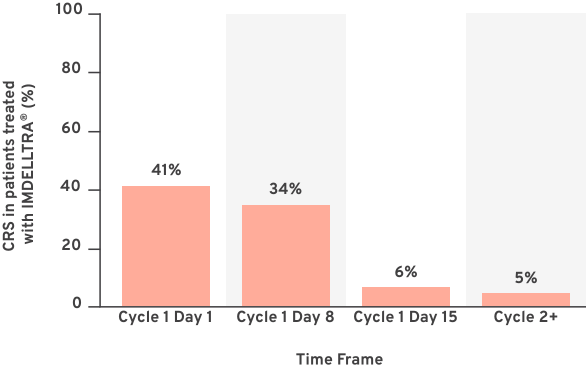
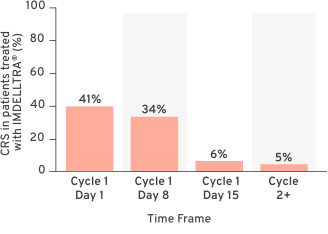
CRS events across treatment doses in the pooled safety population who received IMDELLTRA®4,*

bar chart showing incidence of any grade CRS events across IMDELLTRA® treatment doses: 39% at Cycle 1 Day 1, 32% at Cycle 1 Day 8, 5% at Cycle 1 Day 15, and 4% at Cycle 2 or later.

In the DeLLphi-300, DeLLphi-301, and DeLLphi-304 pooled safety population:2,*

  • CRS occurred in 57% (n=268/473) of patients who received IMDELLTRA®, including 39%, 15%, 1.7%, and 0.2% of patients who experienced Grade 1, 2, 3, and 4 CRS, respectively*
  • Recurrent CRS occurred in 24% of IMDELLTRA®-treated patients including 20% Grade 1 and 3.4% Grade 2; one patient experienced recurrent Grade 3 CRS*
  • Among the 268 patients who experienced CRS, 73% had CRS after the first dose, 60% had CRS after the second dose, and 15% had CRS following the third dose or later. Following the Cycle 1 Day 1, Day 8, and Day 15 infusions, 24%, 8%, and 1% of patients experienced Grade ≥ 2 CRS, respectively*

Onset and resolution of CRS with IMDELLTRA® in the DeLLphi-300, DeLLphi-301, and DeLLphi-304 pooled safety population*


Median onset of all Grade CRS from most recent dose of IMDELLTRA®2,*

16 hours

(range: start of infusion to 15 days)

TRAEs resulting in dose interruptions and/or reductions5,*

3 days

(IQR: 2–4 days)

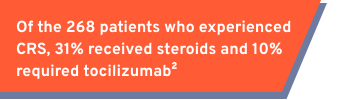
Of the 268 patients who experienced CRS, 31% received steroids and 10% required tocilizumab

For severe or life-threatening CRS, the US Prescribing Information recommend tocilizumab or equivalent therapy and intensive monitoring (eg, intensive care unit [ICU]) for supportive therapy2

Please see the IMDELLTRA® full Prescribing Information for guidelines on grading, dosage modifications, and management of CRS and neurologic toxicity, including ICANS.

*Based on the pooled safety population of 473 patients with SCLC enrolled in DeLLphi-300, DeLLphi-301, and DeLLphi-304 who received IMDELLTRA® 1 mg on Cycle 1 Day 1 followed by 10 mg on Days 8 and 15, and then Q2W until disease progression or intolerable toxicity.2,4,5

IMDELLTRA® can cause CRS, including life-threatening or fatal reactions. Clinical signs and symptoms of CRS include:2

  • Pyrexia
  • Hypotension
  • Fatigue
  • Tachycardia
  • Tachycardia
  • Headache
  • Hypoxia
  • Nausea
  • Vomiting
  • Nausea
  • Vomiting

CRS is an acute systemic inflammatory response to immunotherapy characterized by fever and, in severe cases, multiple organ dysfunction6

CRS symptoms are progressive with fever at the onset7

Potentially life-threatening complications of CRS may include:2

  • Cardiac dysfunction
  • Acute respiratory
    distress syndrome
  • Neurologic toxicity
  • Neurologic toxicity
  • Renal and/or hepatic failure
  • Disseminated
    intravascular
    coagulation (DIC)
  • Disseminated
    intravascular
    coagulation (DIC)

CRS grading2

Based on American Society for Transplantation and Cellular Therapy (ASTCT) Consensus Grading (2019).2

CRS, cytokine release syndrome; ICANS, immune effector cell–associated neurotoxicity syndrome; IQR, interquartile range; Q2W, every 2 weeks; SCLC, small cell lung cancer.

Grade Defining Symptoms
Grade 1 Symptoms require symptomatic treatment only (eg, fever ≥ 100.4°F without hypotension or hypoxia)
Grade 2 Symptoms require and respond to moderate intervention
  • Fever ≥ 100.4°F
  • Hypotension responsive to fluids not requiring vasopressors, and/or
  • Hypoxia requiring low-flow nasal cannula or blow-by
Grade 3 Severe symptoms defined as temperature ≥ 100.4°F with:
  • Hemodynamic instability requiring a vasopressor (with or without vasopressin) and/or
  • Worsening hypoxia or respiratory distress requiring high-flow nasal cannula (> 6 L/min oxygen or face mask
Grade 4 Life-threatening symptoms defined as temperature ≥ 100.4°F with:
  • Hemodynamic instability requiring multiple vasopressors (excluding vasopressin) and/or
  • Worsening hypoxia or respiratory distress despite oxygen administration requiring positive pressure

Neurologic toxicity/ICANS

The incidence of ICANS was 4.7% in IMDELLTRA®-treated patients in the pooled safety population2

In the DeLLphi-300, DeLLphi-301, and DeLLphi-304 pooled safety population:2,*

  • Neurologic toxicity occurred in 65% of patients who received IMDELLTRA®, with Grade 3 or higher events in 7% of patients including fatal events in 0.2%*
  • The most frequent neurologic toxicities were dysgeusia (34%), headache (17%), peripheral neuropathy (9%), dizziness (9%), and insomnia (8%)*
  • The incidence of signs and symptoms consistent with ICANS was 10% in IMDELLTRA®-treated patients, including events with the preferred terms: ICANS (4.7%), muscular weakness (3.2%), cognitive disorder (0.6%), aphasia (0.6%), depressed level of consciousness (0.4%), seizures (0.4%), encephalopathy (0.4%), and leukoencephalopathy (0.2%)*
  • There was one fatal reaction of ICANS*
  • Recurrent ICANS occurred in 1.5% of patients*
  • Of the patients who experienced ICANS, most experienced the event following Cycle 1 Day 1 (2.5%) and Cycle 1 Day 8 (3.6%). Following Day 1, Day 8, and Day 15 infusions, 1.3%, 1.3%, and 0.4% of patients experienced Grade ≥ 2 ICANS, respectively*

Onset and time to resolution of ICANS with IMDELLTRA® based on the pooled DeLLphi-300, DeLLphi-301, and DeLLphi-304 safety population2,*

Median onset from the first dose of IMDELLTRA®

16 hours

(range: 1–862 days)

Median time to resolution

4 days

(range: 1–40 days)

In DeLLphi-304, 0.4% of ICANS events led to treatment discontinuation

Provide supportive therapy according to the US Prescribing Information, which may include intensive care for severe or life-threatening neurologic toxicities, including ICANS.2

Please see the IMDELLTRA® full Prescribing Information for guidelines on grading, dosage modifications, and management of CRS and neurologic toxicity, including ICANS.

*Based on the pooled safety population of 473 patients enrolled in DeLLphi-300, DeLLphi-301, and DeLLphi-304 who received IMDELLTRA® 1 mg on Cycle 1 Day 1 followed by 10 mg on Days 8 and 15, and then Q2W until disease progression or intolerable toxicity.2

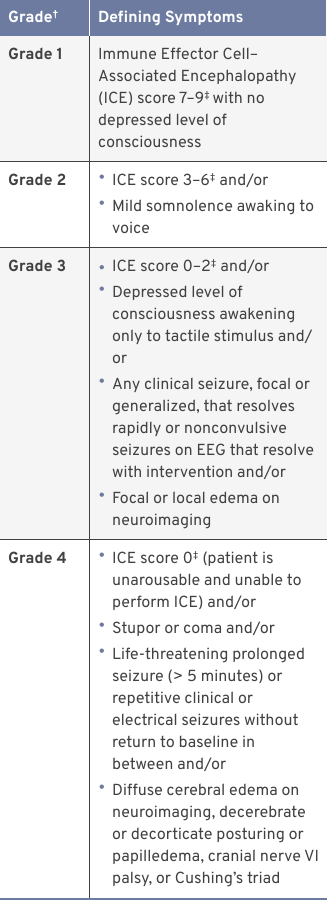
ICANS grading2

ICANS grading-table
Grade Defining Symptoms
Grade 1 Immune Effector Cell–Associated Encephalopathy (ICE) score 7–9 with no depressed level of consciousness
Grade 2
  • ICE score 3–6 and/or
  • Mild somnolence awaking to voice
Grade 3
  • ICE score 0–2 and/or
  • Depressed level of consciousness awakening only to tactile stimulus and/or
  • Any clinical seizure, focal or generalized, that resolves rapidly or nonconvulsive seizures on EEG that resolve with intervention and/or
  • Focal or local edema on neuroimaging
Grade 4
  • ICE score 0 (patient is unarousable and unable to perform ICE) and/or
  • Stupor or coma and/or
  • Life-threatening prolonged seizure (> 5 minutes) or repetitive clinical or electrical seizures without return to baseline in between and/or
  • Diffuse cerebral edema on neuroimaging, decerebrate or decorticate posturing or papilledema, cranial nerve VI palsy, or Cushing’s triad

Based on American Society for Transplantation and Cellular Therapy (ASTCT) Consensus Grading (2019).2

If patient is arousable and able to perform ICE Assessment, assess: orientation (oriented to year, month, city, hospital = 4 points); naming (names 3 objects, eg, point to clock, pen, button = 3 points); following commands (eg, “show me 2 fingers” or “close your eyes and stick out your tongue” = 1 point); writing (ability to write a standard sentence = 1 point); and attention (count backwards from 100 by ten = 1 point). If patient is unarousable and unable to perform ICE Assessment (Grade 4 ICANS) = 0 points.2

CNS, central nervous system; CRS, cytokine release syndrome; EEG, electroencephalogram; ICANS, immune effector cell–associated neurotoxicity syndrome; Q2W, every 2 weeks.

Resource for you and your office

IMPORTANT SAFETY INFORMATION

WARNING: CYTOKINE RELEASE SYNDROME and NEUROLOGIC TOXICITY including IMMUNE EFFECTOR CELL-ASSOCIATED NEUROTOXICITY SYNDROME

  • Cytokine release syndrome (CRS), including life-threatening or fatal reactions, can occur in patients receiving IMDELLTRA®. Initiate treatment with IMDELLTRA® using the step-up dosing schedule to reduce the incidence and severity of CRS. Withhold IMDELLTRA® until CRS resolves or permanently discontinue based on severity.
  • Neurologic toxicity and immune effector cell-associated neurotoxicity syndrome (ICANS), including life-threatening or fatal reactions, can occur in patients receiving IMDELLTRA®. Monitor patients for signs and symptoms of neurologic toxicity, including ICANS, during treatment and treat promptly. Withhold IMDELLTRA® until ICANS resolves or permanently discontinue based on severity.

WARNINGS AND PRECAUTIONS

  • Cytokine Release Syndrome (CRS): IMDELLTRA® can cause CRS including life-threatening or fatal reactions. In the pooled safety population, CRS occurred in 57% (268/473) of patients who received IMDELLTRA®, including 39% Grade 1, 15% Grade 2, 1.7% Grade 3 and 0.2% Grade 4. Recurrent CRS occurred in 24% of IMDELLTRA®-treated patients including 20% Grade 1 and 3.4% Grade 2; one patient experienced recurrent Grade 3.

    Among the 268 patients who experienced CRS, 73% had CRS after the first dose, 60% had CRS after the second dose, and 15% had CRS following the third or later dose. Following the Cycle 1 Day 1, Day 8, Day 15 infusions, 24%, 8%, and 1% of patients experienced Grade ≥ 2 CRS, respectively. From Cycle 2 onwards, 1.5% of patients experienced Grade ≥ 2 CRS. Of the patients who experienced CRS, 31% received steroids and 10% required tocilizumab. The median time to onset of all grade CRS from most recent dose of IMDELLTRA® was 16 hours (range: start of infusion to 15 days). The median time to onset of Grade ≥ 2 CRS from most recent dose of IMDELLTRA® was 15 hours (range: start of infusion to 15 days).

    Clinical signs and symptoms of CRS included pyrexia, hypotension, fatigue, tachycardia, headache, hypoxia, nausea, and vomiting. Potentially life-threatening complications of CRS may include cardiac dysfunction, acute respiratory distress syndrome, neurologic toxicity, renal and/or hepatic failure, and disseminated intravascular coagulation (DIC).

    Administer IMDELLTRA® following the recommended step-up dosing and administer concomitant medications before and after Cycle 1 Day 1 and Cycle 1 Day 8 IMDELLTRA® infusions as described in Table 3 of the Prescribing Information (PI) to reduce the risk of CRS. Administer IMDELLTRA® in an appropriate healthcare facility equipped to monitor and manage CRS. Ensure patients are well hydrated prior to administration of IMDELLTRA®.

    Closely monitor patients for signs and symptoms of CRS during treatment with IMDELLTRA®. At the first sign of CRS, immediately discontinue IMDELLTRA® infusion, evaluate the patient for hospitalization and institute supportive care based on severity. Withhold or permanently discontinue IMDELLTRA® based on severity. Counsel patients and caregivers to seek medical attention should signs or symptoms of CRS occur.

  • Neurologic Toxicity, Including ICANS: IMDELLTRA® can cause life-threatening or fatal neurologic toxicity, including ICANS. In the pooled safety population, neurologic toxicity occurred in 65% of patients who received IMDELLTRA®, with Grade 3 or higher events in 7% of patients including fatal events in 0.2%. The most frequent neurologic toxicities were dysgeusia (34%), headache (17%), peripheral neuropathy (9%), dizziness (9%), and insomnia (8%).

    The incidence of signs and symptoms consistent with ICANS was 10% in IMDELLTRA®-treated patients, including events with the preferred terms: ICANS (4.7%), muscular weakness (3.2%), cognitive disorder (0.6%), aphasia (0.6%), depressed level of consciousness (0.4%), seizures (0.4%), encephalopathy (0.4%), and leukoencephalopathy (0.2%). There was one fatal reaction of ICANS. Recurrent ICANS occurred in 1.5% of patients. Of the patients who experienced ICANS, most experienced the event following Cycle 1 Day 1 (2.5%) and Cycle 1 Day 8 (3.6%). Following Day 1, Day 8, and Day 15 infusions, 1.3%, 1.3% and 0.4% of patients experienced Grade ≥ 2 ICANS, respectively. ICANS can occur several weeks following administration of IMDELLTRA®. The median time to onset of ICANS from the first dose of IMDELLTRA® was 16 days (range: 1 to 862 days). The median time to resolution of ICANS was 4 days (range: 1 to 40 days).

    The onset of ICANS can be concurrent with CRS, following resolution of CRS, or in the absence of CRS. Clinical signs and symptoms of ICANS may include but are not limited to confusional state, depressed level of consciousness, disorientation, somnolence, lethargy, and bradyphrenia.

    Patients receiving IMDELLTRA® are at risk of neurologic adverse reactions and ICANS resulting in depressed level of consciousness. Advise patients to refrain from driving and engaging in hazardous occupations or activities, such as operating heavy or potentially dangerous machinery, until neurologic symptoms resolve.

    Closely monitor patients for signs and symptoms of neurologic toxicity and ICANS during treatment with IMDELLTRA®. At the first sign of ICANS, immediately discontinue the infusion, evaluate the patient and provide supportive therapy based on severity. Withhold IMDELLTRA® or permanently discontinue based on severity.

  • Cytopenias: IMDELLTRA® can cause cytopenias including neutropenia, thrombocytopenia, and anemia. In the pooled safety population, based on laboratory data, decreased neutrophils occurred in 16% of patients, including 9% Grade 3 or 4. The median time to onset for Grade 3 or 4 decreased neutrophil count was 41 days (range: 2 to 306 days). Decreased platelets occurred in 30% including 2.2% Grade 3 or 4. The median time to onset for Grade 3 or 4 decreased platelets was 67 days (range: 3 to 420 days). Decreased hemoglobin occurred in 56% of patients, including 4.7% Grade 3 or 4. Febrile neutropenia was reported as an adverse event in 1.5% of patients treated with IMDELLTRA®.

    Monitor patients for signs and symptoms of cytopenias. Perform complete blood counts prior to treatment with all doses of IMDELLTRA®, up through Cycle 5 Day 15 and then prior to administration on Day 1 of each cycle starting with Cycle 6. Based on the severity of cytopenias, temporarily withhold, or permanently discontinue IMDELLTRA®.

  • Infections: IMDELLTRA® can cause serious infections, including life-threatening and fatal infections.

    In the pooled safety population, infections, including opportunistic infections, occurred in 43% of patients who received IMDELLTRA®, including 14% Grade 3 or 4. The most frequent infections were pneumonia (11%), urinary tract infection (9%), COVID-19 (6%), upper respiratory tract infection (4.7%), respiratory tract infection (4%), candida infection (2.1%), oral candidiasis (2.1%), and nasopharyngitis (2.1%).

    Monitor patients for signs and symptoms of infection prior to and during treatment with IMDELLTRA® and treat as clinically indicated. Withhold or permanently discontinue IMDELLTRA® based on severity.

  • Hepatotoxicity: IMDELLTRA® can cause hepatotoxicity. In the pooled safety population, based on laboratory data, elevated ALT occurred in 39% of patients who received IMDELLTRA®, including 2.5% with Grade 3 or 4 ALT. Elevated AST occurred in 43% of patients, including 3.2% Grade 3 or 4. Elevated bilirubin also occurred in 16% of patients, including 1.3% Grade 3 or 4. Liver enzyme elevation can occur with or without concurrent CRS.

    Monitor liver enzymes and bilirubin prior to treatment with IMDELLTRA®, and as clinically indicated. Withhold IMDELLTRA® or permanently discontinue based on severity.

  • Hypersensitivity: IMDELLTRA® can cause severe hypersensitivity reactions. Clinical signs and symptoms of hypersensitivity may include, but are not limited to, rash and bronchospasm. Monitor patients for signs and symptoms of hypersensitivity during treatment with IMDELLTRA® and manage as clinically indicated. Withhold or consider permanent discontinuation of IMDELLTRA® based on severity.

  • Embryo-Fetal Toxicity: Based on its mechanism of action, IMDELLTRA® may cause fetal harm when administered to a pregnant woman. Advise patients of the potential risk to a fetus. Advise females of reproductive potential to use effective contraception during treatment with IMDELLTRA® and for 2 months after the last dose.


ADVERSE REACTIONS

  • The pooled safety population reflects exposure to intravenous IMDELLTRA®, as a single agent, at the recommended dosage of IMDELLTRA® 1 mg on Cycle 1 Day 1 followed by 10 mg on Days 8 and 15, and then every 2 weeks until disease progression or intolerable toxicity in 473 patients with small cell lung cancer enrolled in three clinical trials: DeLLphi-300, DeLLphi-301 and DeLLphi-304. Among 473 patients who received IMDELLTRA®, 40% were exposed for 6 months or longer and 19% were exposed for greater than one year.

  • The most common (≥ 20%) adverse reactions were CRS (57%), fatigue (48%), decreased appetite (38%), dysgeusia (34%), pyrexia (33%), constipation (31%), musculoskeletal pain (31%), and nausea (25%).

  • The most common (≥ 5%) Grade 3 or 4 laboratory abnormalities were decreased lymphocytes (43%), decreased sodium (12%), decreased total neutrophils (9%), and increased uric acid (6%).

DOSAGE AND ADMINISTRATION: Important Dosing Information

  • Administer IMDELLTRA® as an intravenous infusion over 1 hour.
  • Administer IMDELLTRA® according to the step-up dose and schedule in the IMDELLTRA® PI (Table 1) to reduce the incidence and severity of CRS.
  • Evaluate complete blood count, liver enzymes and bilirubin prior to administration of all doses of IMDELLTRA® up through Cycle 5 Day 15 and then prior to administration of IMDELLTRA® on Day 1 of each cycle starting with Cycle 6. More frequent evaluation may be necessary if clinically indicated.
  • For Cycle 1, administer recommended concomitant medications before and after Cycle 1 Day 1 and Cycle 1 Day 8 IMDELLTRA® infusions to reduce the risk of CRS reactions as described in the PI (Table 3).
  • IMDELLTRA® should only be administered by a qualified healthcare professional with appropriate medical support to manage severe reactions such as CRS and neurologic toxicity including ICANS.
  • Due to the risk of CRS and neurologic toxicity, including ICANS, monitor patients from the start of the IMDELLTRA® infusion for 22 to 24 hours following Cycle 1 Day 1 and Cycle 1 Day 8 in an appropriate healthcare setting.
  • Recommend that patients remain within 1 hour of an appropriate healthcare setting for a total of 48 hours from the start of the infusion with IMDELLTRA® following Cycle 1 Day 1 and Cycle 1 Day 8 doses, accompanied by a caregiver.
  • Inform both the patient and the caregiver on the signs and symptoms of CRS and ICANS prior to discharge.
  • Ensure patients are well hydrated prior to administration of IMDELLTRA®.

INDICATION

IMDELLTRA® (tarlatamab-dlle) is indicated for the treatment of adult patients with extensive stage small cell lung cancer (ES-SCLC) with disease progression on or after platinum-based chemotherapy.

Please see IMDELLTRA® full Prescribing Information, including BOXED WARNINGS.


References: 1. Mountzios G, et al. N Engl J Med. 2025;393:349-361. 2. IMDELLTRA® (tarlatamab-dlle) prescribing information, Amgen. 3. Data on file, Amgen;[1]; 2025. 4. Data on file, Amgen;[2]; 2025. 5. Shimabukuro-Vornhagen A, et al. J Immunother Cancer. 2018;6:56. 6. Lee DW, et al. Biol Blood Marrow Transplant. 2019;25:625-638. 7. Mountzios G, et al. N Engl J Med. 2025;393(suppl):349-361.

References: 1. IMDELLTRA® (tarlatamab-dlle) prescribing information, Amgen. 2. Lee DW, et al. Biol Blood Marrow Transplant. 2019;25:625-638.

References: 1. IMDELLTRA® (tarlatamab-dlle) prescribing information, Amgen. 2. Mountzios G, et al. N Engl J Med. 2025;393:349-361. 3. Mountzios G, et al. N Engl J Med. 2025;393(suppl):349-361.

References: 1. Rudin CM, et al. Nat Rev Dis Primers. 2021;7:3. 2. Meriggi F. Cancers (Basel). 2024;16:255. 3. Sabari JK, et al. Nat Rev Clin Oncol. 2017;14:549-561. 4. National Cancer Institute. www.cancer.gov. Accessed September 17, 2025. 5. IMDELLTRA® (tarlatamab-dlle) prescribing information, Amgen. 6. Mountzios G, et al. N Engl J Med. 2025;393:349-361. 7. Rojo F, et al. Lung Cancer. 2020;147:237-243. 8. National Cancer Institute. www.cancer.gov. Accessed October 24, 2025. 9. Referenced with permission from the NCCN Clinical Practice Guidelines in Oncology (NCCN Guidelines®) for Small Cell Lung Cancer V.2.2026. ©National Comprehensive Cancer Network, Inc. 2025. All rights reserved. Accessed September 17, 2025. To view the most recent and complete version of the guideline, go online to NCCN.org. 10. Referenced with permission from the NCCN Clinical Practice Guidelines in Oncology (NCCN Guidelines®) for Central Nervous System Cancers V.2.2025. ©National Comprehensive Cancer Network, Inc. 2025. All rights reserved. Accessed September 2, 2025. To view the most recent and complete version of the guideline, go online to NCCN.org. 11. Kalemkerian GP, et al. J Clin Oncol. 2025;43:101-105.

NCCN makes no warranties of any kind whatsoever regarding their content, use or application and disclaims any responsibility for their application or use in any way.

References: 1. IMDELLTRA® (tarlatamab-dlle) prescribing information, Amgen. 2. Mountzios G, et al. N Engl J Med. 2025;393:349-361.

IMPORTANT SAFETY INFORMATION

WARNING: CYTOKINE RELEASE SYNDROME AND NEUROLOGIC TOXICITY including IMMUNE EFFECTOR CELL‐ASSOCIATED NEUROTOXICITY SYNDROME

  • Cytokine release syndrome (CRS), including life-threatening or fatal reactions, can occur in patients
Back to top